Best Neighborhoods to Buy a Home in Palatine, IL
Real Estate, Palatine IL Neighborhoods
What Are the Best Neighborhoods in Palatine, IL to Buy a Home?
Thinking about buying a home in Palatine, Illinois? You’re not alone. With strong schools, a small‑town feel, and convenient access to Chicago, Palatine continues to attract buyers in 2026. But with so many distinct areas—from walkable downtown streets to quiet, tree‑lined subdivisions—choosing the right neighborhood can feel overwhelming. This guide breaks down some of the best neighborhoods in Palatine for today’s buyers, based on recent pricing, amenities, and lifestyle fit.
A Quick Look at the Palatine Market in 2026
Before diving into specific neighborhoods, it helps to understand the broader market. As of mid‑2026, the average home value in Palatine sits around $385,886, up about 5.2% year‑over‑year, according to Zillow. Multiple data sources place the median sale price in roughly the $372,000–$396,000 range, and homes often go under contract in about one to three weeks. Inventory is tight—around 1.1 to 1.4 months of supply—so it’s still very much a seller’s market, even as conditions show signs of slowly cooling.
What this means for you: the neighborhood you choose matters. Some areas offer better value for first‑time buyers, while others command premium prices for larger homes, top schools, or a highly walkable lifestyle. Below are the standout Palatine neighborhoods to consider, grouped by the kind of lifestyle and budget they best serve.
Downtown Palatine: Best for Walkability and Commuters
If you dream of stepping out your front door and walking to coffee shops, restaurants, and the Metra station, Downtown Palatine is hard to beat. This is the village’s most walkable area, with a lively mix of historic buildings, newer construction, local boutiques, and community events. Redfin notes a high walk score for the core downtown area, and residents frequently praise the neighborhood’s energy and convenience on sites like Niche.
Housing here is varied. You’ll find:
Condos and townhomes starting around $100,000–$200,000, ideal for entry‑level buyers or downsizers.
Single‑family homes typically ranging from the low $200,000s up into the $500,000+ range, depending on size and renovation level.
Neighborhoods.com reports a median sale price around $385,000, with recent listings spanning roughly $212,000–$739,000. For buyers who prioritize a car‑light lifestyle and easy train access to Chicago, Downtown Palatine is one of the best choices in the village—and one of the few truly urban‑feeling pockets in the northwest suburbs.
Pepper Tree: Established, Amenity‑Rich, and Great for Families
Built largely in the 1970s, Pepper Tree is a favorite among buyers who want character homes in a mature setting. Expect split‑level, ranch, and Colonial Revival styles, often with vaulted ceilings, large windows, and natural wood or brick exteriors. Homes.com notes that properties here typically range from about $350,000 to $600,000, and demand can be strong enough to spark occasional bidding wars in today’s tight market.
Pepper Tree’s appeal goes beyond the homes themselves. Residents enjoy access to community amenities like the nearby Eagle Pool, playgrounds, and proximity to forest preserves and golf courses. For families, the combination of outdoor recreation, neighborhood stability, and solid schools makes Pepper Tree one of the top choices in Palatine for long‑term living.
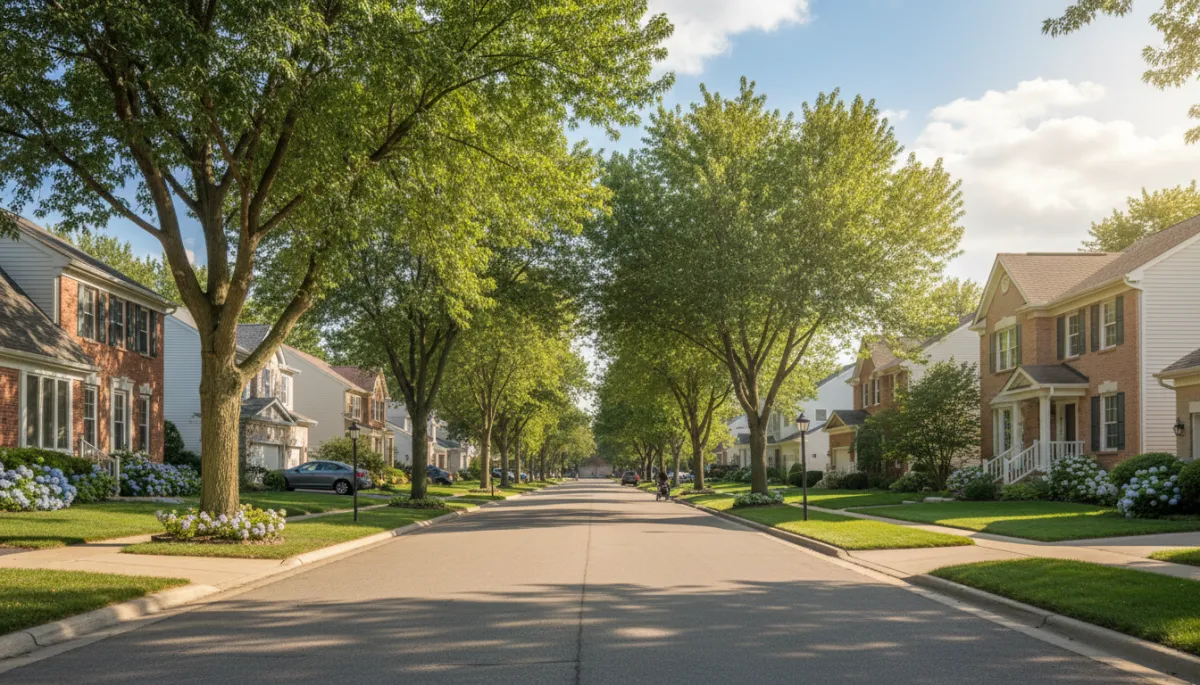
Mature-tree neighborhoods like Pepper Tree and Reseda offer space, schools, and strong resale value.
Reseda: Quiet Streets and Strong Schools
Another 1970s‑era favorite, Reseda is known for its tree‑lined streets, well‑kept homes, and family‑friendly atmosphere. Housing stock includes Colonial Revival and split‑level homes, many of which have been thoughtfully updated over the years. Homes.com reports typical home prices in the $375,000–$500,000 range, with renovated properties approaching $600,000. Townhouses and condos nearby can offer more affordable entry points, often around $125,000–$250,000.
Reseda scores well with families thanks to its access to award‑winning schools, parks, and convenient routes to shopping and transit. If you’re looking for a classic suburban feel with a strong sense of community and good long‑term appreciation potential, Reseda deserves a close look.
Winston Park: Classic Ranch Homes and Long‑Term Livability
Winston Park is an established neighborhood characterized by classic ranch‑style homes on generous lots and an abundance of mature trees. While exact pricing can vary by size and level of updates, this area consistently shows up in open house listings and buyer shortlists, signaling strong demand and perceived value. Nearby Zillow data also shows that comparable Palatine neighborhoods like Winston Knolls carry home values in the mid‑$400,000s, underscoring the appeal of these established, mid‑priced communities.
For buyers who want single‑story living, bigger yards, and a neighborhood that feels “settled” rather than up‑and‑coming, Winston Park offers a compelling balance of comfort, space, and resale stability.
Plum Grove Village: Higher‑End Homes in a Serene Setting
South of downtown, Plum Grove Village appeals to buyers seeking a quieter, more upscale feel without straying too far from Palatine amenities. The neighborhood offers a mix of single‑family homes, condos, and townhouses, with close proximity to Palatine High School and recreational spaces like Plum Grove Reservoir Park.
Homes.com places average home values here around $620,000, with listings spanning roughly $220,000 to $1.3 million. That wide range reflects both more modest attached homes and larger, well‑appointed single‑family properties. If budget allows and you’re looking for a long‑term “forever home” in a peaceful setting, Plum Grove Village is one of Palatine’s standout options.
Willow Wood: Parks, Trails, and Strong Connectivity
Willow Wood combines suburban calm with excellent access to outdoor amenities and major commuter routes. Residents enjoy nearby Willowwood Park, the Palatine Bike Trail, and convenient connections to I‑290, I‑90, and Metra. It’s a great choice for buyers who want a quiet neighborhood but still need an efficient commute to surrounding job centers or downtown Chicago.
Homes.com estimates the average property value around $522,000, with typical ranges between about $444,000 and $730,000. With solid schools and easy access to recreation, Willow Wood often appeals to move‑up buyers—those leaving a starter home for more space and amenities.
Capri Village: Quiet Suburb Living Near Nature
Nestled between Deer Grove and Buffalo Creek forest preserves, Capri Village is ideal for buyers who value green space and a tucked‑away feel. Nearly half of the housing stock here is apartments, making it a popular mix of renters and owners, but there are also single‑family options for buyers seeking a quieter corner of Palatine.
Capri Village offers easy access to major roads like IL‑53 and Lake Cook Road, along with nearby shopping corridors. For buyers who want a peaceful environment with nature at their doorstep—but still need everyday conveniences within a short drive—Capri Village is a strong contender.
Hickory Hill: One of the Most Affordable Ways to Own in Palatine
In a market where prices have climbed steadily, Hickory Hill stands out for its relative affordability. This smaller neighborhood, built around 1989–1990, offers a mix of condos, townhomes, and single‑family homes. Neighborhoods.com reports a median sale price of about $264,000, with recent closed sales typically between $200,000 and $275,000.
For first‑time buyers or those downsizing from a larger property, Hickory Hill can be an excellent “value play”—you get into Palatine’s strong housing market and school districts without stretching into the higher price brackets found in areas like Plum Grove Village or Willow Wood.
Other Notable, Higher‑Value Areas to Watch
Beyond the core neighborhoods above, several Palatine areas consistently show elevated home values and strong demand. Zillow’s neighborhood‑level data highlights places such as Golden Acres (around $520,000), Poplar Hills (about $517,000), and Scarsdale (roughly $660,000). While some of these blend into neighboring communities just outside Palatine’s strict boundaries, they share the same appeal: larger homes, attractive lots, and a reputation for stability and strong schools.
These pockets are particularly well‑suited for buyers seeking long‑term appreciation and “move‑once” properties—homes where you can comfortably stay through multiple life stages without outgrowing the space or amenities.
Matching Neighborhoods to Your Buyer Profile
With so many good options, the “best” neighborhood in Palatine really comes down to your priorities. Here’s a quick way to narrow your search:
Entry‑level or budget‑conscious buyers: Focus on Hickory Hill and condo/townhome options in Downtown Palatine, where prices around $200,000–$275,000 are still attainable in 2026.
Walkable lifestyle and commuters: Downtown Palatine offers the best combination of restaurants, local events, and direct Metra access for an easy trip into Chicago.
Families prioritizing schools and community:Reseda, Pepper Tree, and Winston Park offer spacious homes, strong school options, and plenty of parks and play spaces.
Buyers seeking scenic or higher‑end homes:Plum Grove Village, Willow Wood, and nearby higher‑value pockets like Golden Acres and Poplar Hills deliver larger homes and tranquil surroundings, often in the $500,000–$650,000+ range.
Nature lovers and quiet‑suburb seekers:Capri Village puts you close to extensive forest preserves and trails while keeping everyday shopping and dining within easy reach.
Final Thoughts: How to Choose the Right Palatine Neighborhood for You
Palatine’s strength lies in its variety. In a single community, you can choose between a condo steps from the train, a 1970s split‑level on a shaded street, or a larger home backing up to parks and trails. The broader market remains competitive—homes often go pending in under a month, and year‑over‑year price growth is still solid—but there are good options at multiple price points if you know where to look.
As you compare neighborhoods, start with three questions:
What’s my true budget? Factor in not just purchase price but taxes, potential HOA fees, and renovation costs. That will quickly clarify whether you’re looking more at Hickory Hill and downtown condos, or at areas like Willow Wood and Plum Grove Village.
How important are commute and walkability? If you’ll be on the train daily, Downtown Palatine jumps to the top of the list. If you work from home or drive, you can cast a wider net toward Pepper Tree, Reseda, Winston Park, or Capri Village.
What lifestyle do I want day‑to‑day? Picture your weekends—are you walking to brunch, taking kids to the park, or exploring forest preserves? Each Palatine neighborhood supports a slightly different rhythm of life.
Once you’ve narrowed your list, touring homes with a local agent who knows these micro‑markets can be invaluable. They’ll help you understand subtle differences in school boundaries, tax rates, and resale trends that don’t always show up in online listings. With clear priorities and the right guidance, you’ll be well‑positioned to find a Palatine neighborhood—and a home—that fits both your budget and your long‑term plans.
